
Silicon & InGaAs Photodiodes for Sensing and OEM Photonics
Lumi supplies silicon photodiodes and InGaAs PIN detectors for near-infrared sensing, optical monitoring, optical communication and TDLAS measurement. Choose by spectral response, responsivity, dark current, junction capacitance, bandwidth, photosensitive area and package.
What Is a Photodiode?
A photodiode is a semiconductor detector that converts incident optical power into electrical current. In an optical measurement system, the laser, VCSEL or other light source is the emitter; the photodiode is the receiver or monitor.
Receiver performance is determined by more than wavelength alone. It depends on the light level reaching the active area, responsivity, detector noise, capacitance, circuit bandwidth and environmental conditions.
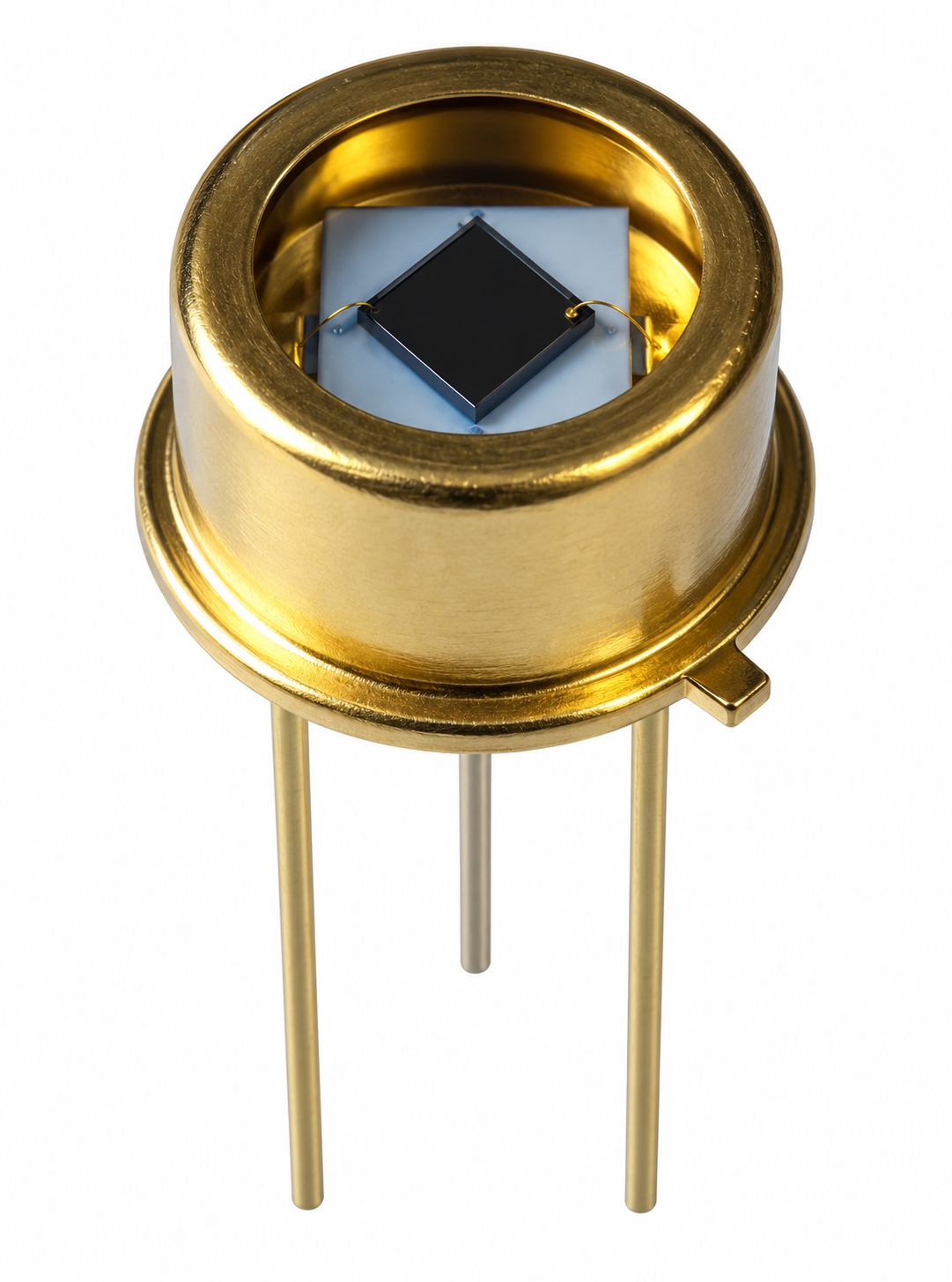
Silicon vs InGaAs PIN Photodiodes
| Parameter | Silicon Photodiode | InGaAs PIN Photodiode |
|---|---|---|
| Detection direction | Visible and near-infrared light | Longer near-infrared wavelengths |
| Lumi published products | 1206 SMD and 940 nm-focused TO-5 devices | 900–1700 nm InGaAs PIN detector |
| Example wavelengths | 940 nm | 1310, 1550, 1650 nm |
| Representative package | 1206 SMD / TO-5 | TO52 |
| Application examples | Proximity, monitoring, compact sensing | TDLAS sensing, optical monitoring and communication |
Explore Lumi Photodiode Products
Browse our current discrete and integrated optical detection devices. Open each product for its detailed spectral, electrical and mechanical data.

WooCommerce may also show integrated devices assigned to the Photodiode category, such as a VCSEL + photodiode component or BOSA with a receiver. These are identified by their own product names.
Current Silicon and InGaAs Detector Options
| Product | Reported product parameters | Typical use |
|---|---|---|
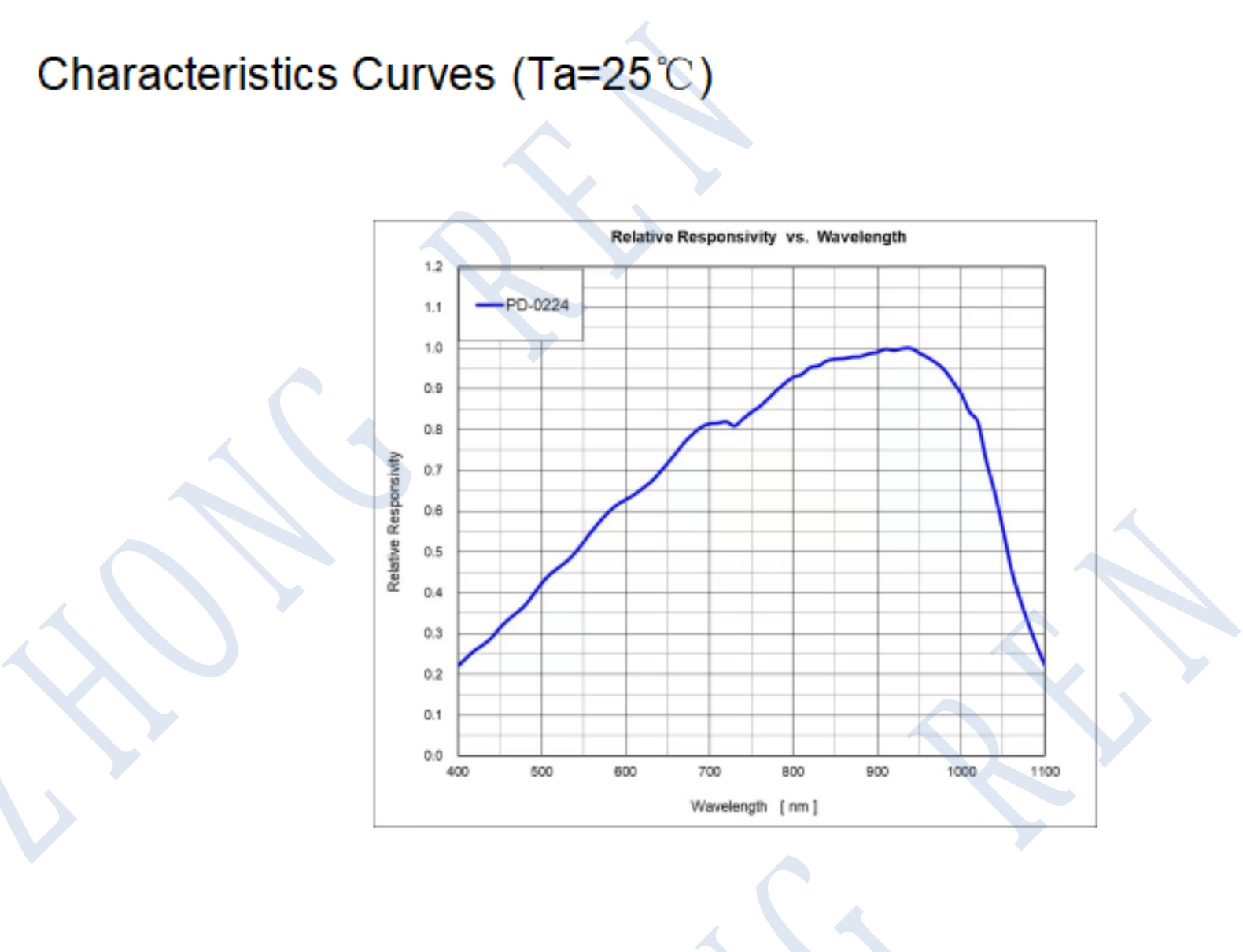
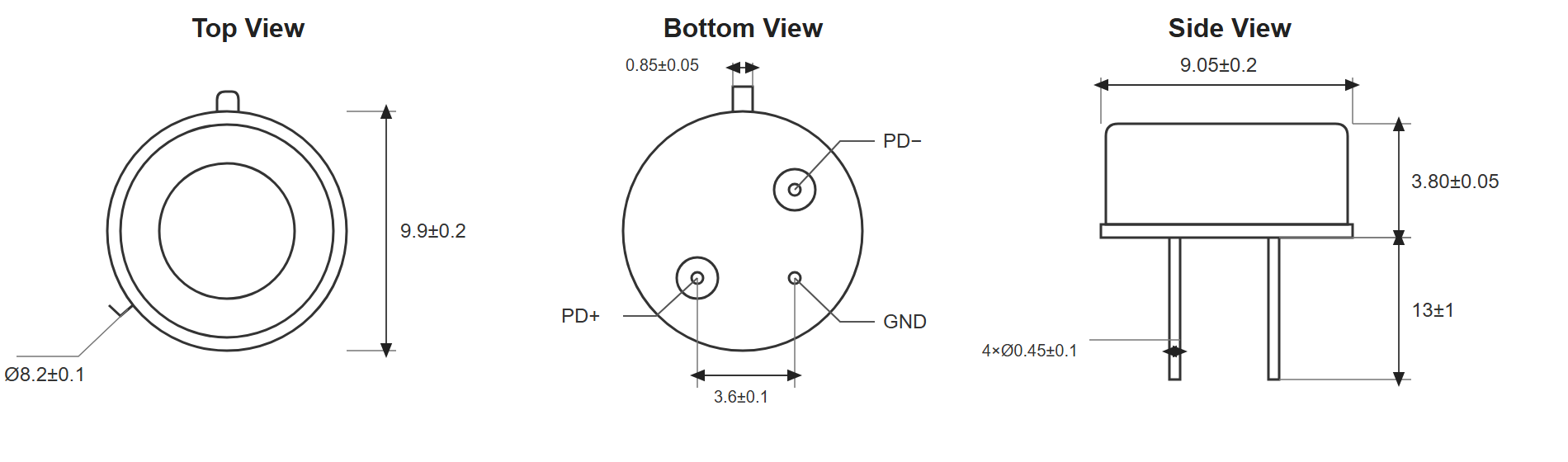
| 940 nm Silicon TO-5 | 940 nm typical peak response; 162 µA typical light current under specified test condition; ≤10 nA dark current; 20 pF typical capacitance | 940 nm optical sensing and detection |
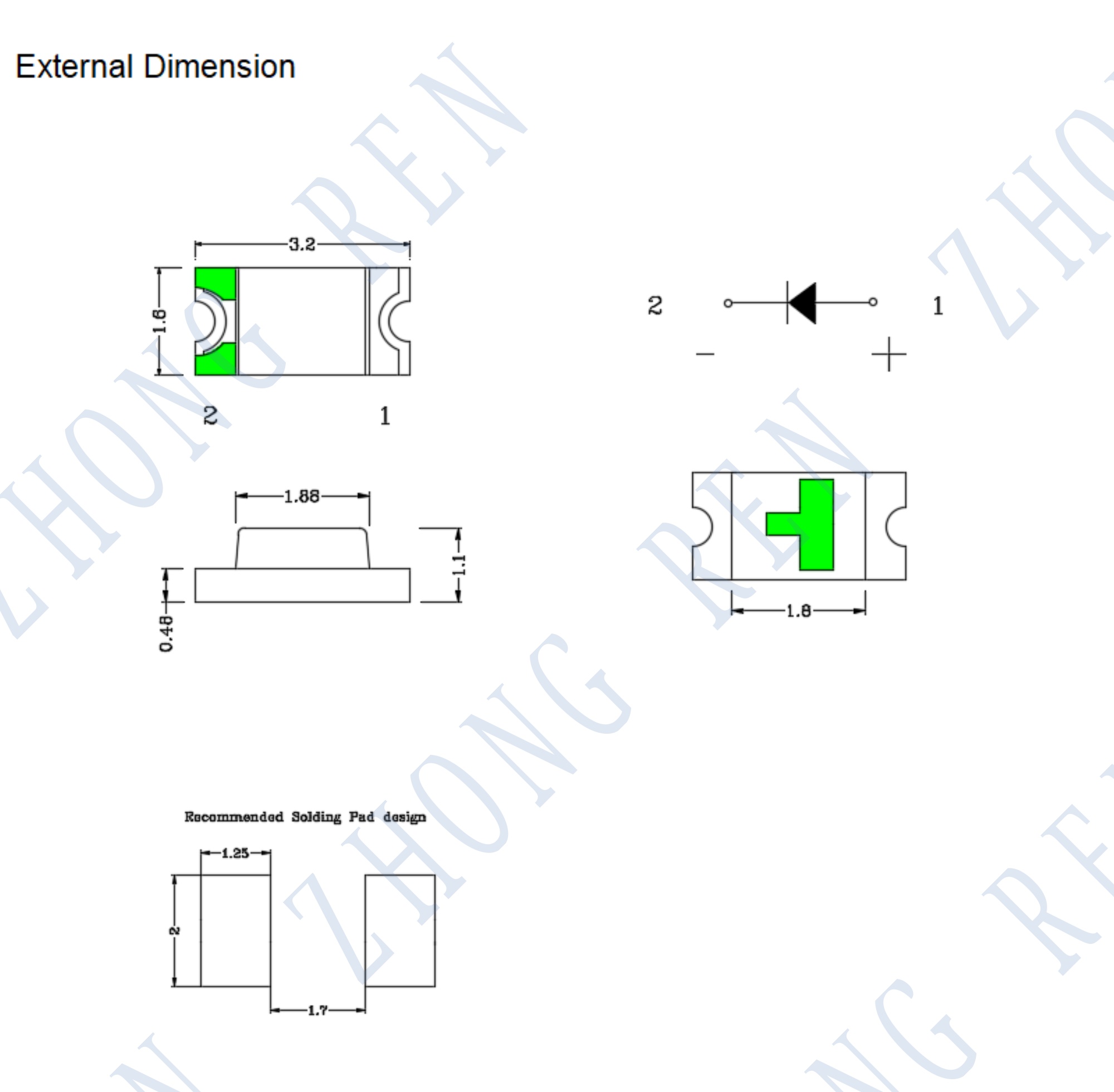
| JC1206PD0224 Silicon SMD | 1206 package; ≤10 nA reverse dark current; ~1 pF typical capacitance; ≥33 V breakdown | Compact PCB optical sensing |
| InGaAs PIN TO52 | 900–1700 nm spectral range; 1.05 A/W typical responsivity at 1550 nm; ≤3 nA dark current | 1310/1550 nm detection and near-IR TDLAS |
Representative Photodiode Package Formats
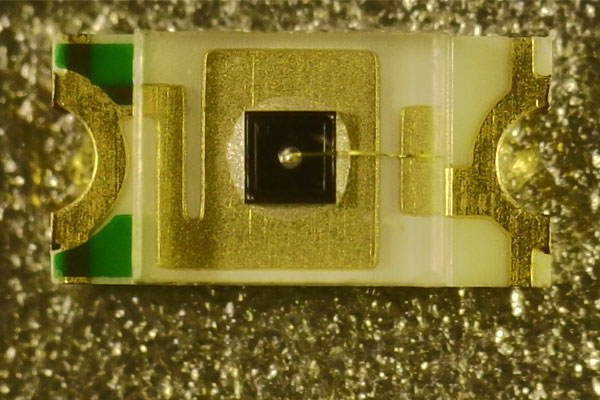
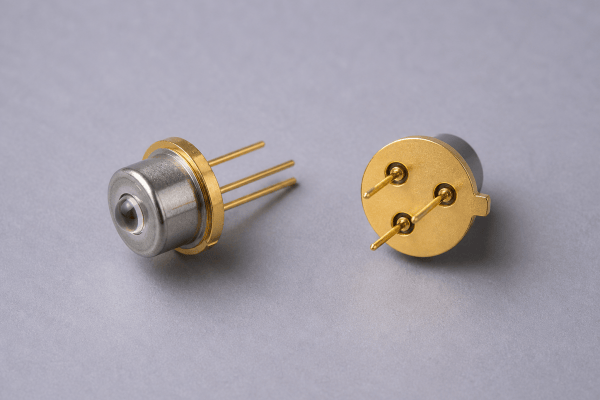
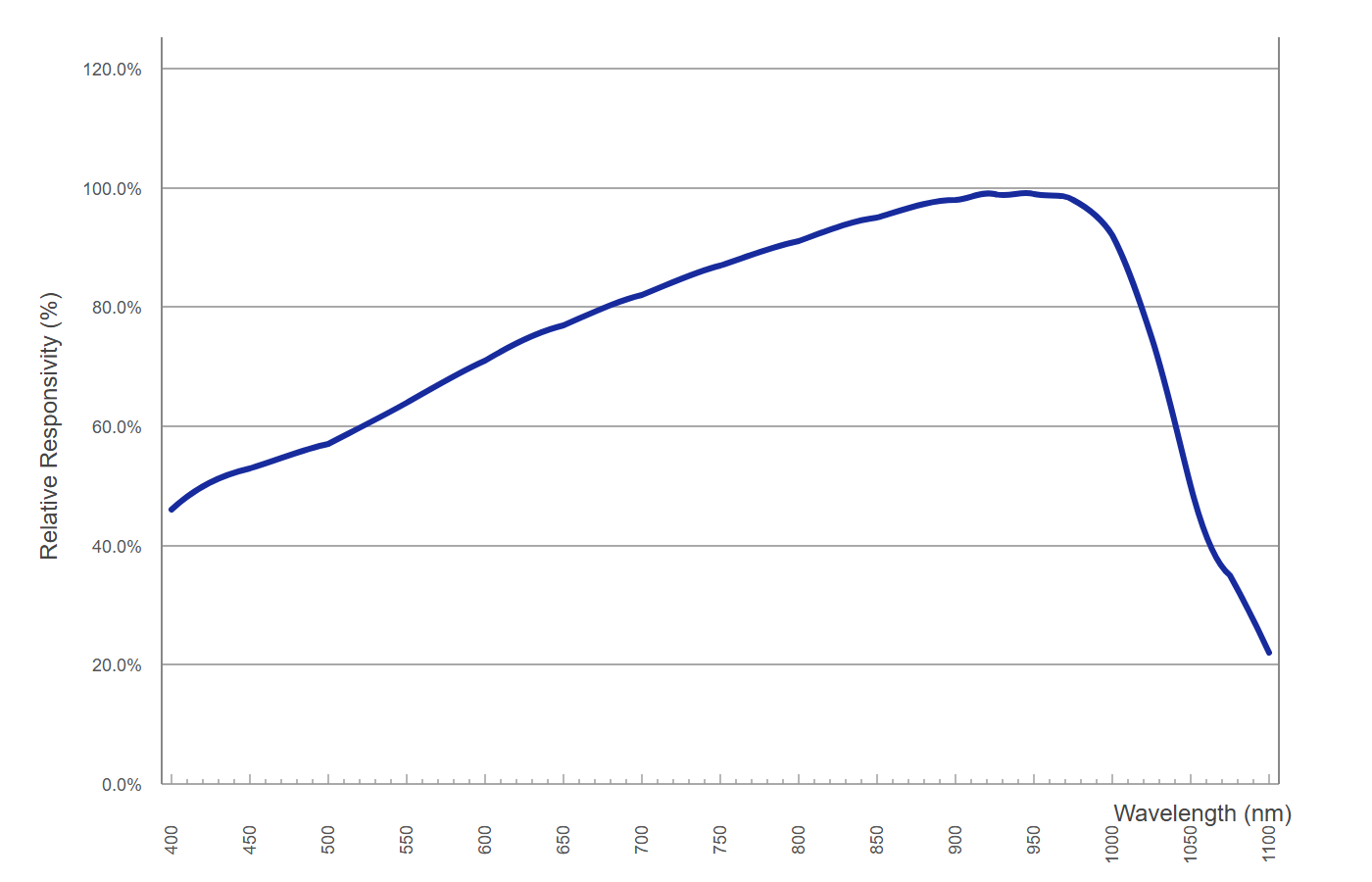
Spectral Response and Package Drawings
Six Parameters to Check When Selecting a Photodiode
01 · Spectral Response
Select a material and device whose sensitivity covers the wavelength emitted by your source.
02 · Responsivity
Use A/W at the relevant wavelength to estimate photocurrent from received optical power.
03 · Dark Current
Consider unwanted current and noise under the intended bias and temperature.
04 · Junction Capacitance
Evaluate the trade-off between active area, capacitance and amplifier bandwidth.
05 · Bandwidth / Speed
Confirm suitability for modulation frequencies, pulses and system time response.
06 · Active Area & Package
Balance alignment tolerance, receiver footprint, SMD vs TO assembly and thermal conditions.
Match Photodiodes with Laser Diodes or VCSELs
| System example | Optical source | Detector direction | Engineering consideration |
|---|---|---|---|
| 940 nm proximity / optical detection | 940 nm VCSEL or IR source | Silicon photodiode | Sensitivity, active area and background-light behavior |
| 1310/1550 nm optical receiver | DFB or FP laser diode | InGaAs PIN photodiode | Bandwidth, responsivity and optical power budget |
| ~1650 nm methane TDLAS | Wavelength-specific DFB laser | 900–1700 nm InGaAs PIN detector | Absorption line, tuning and detector wavelength coverage |
Photodiodes in VCSEL and BOSA Assemblies
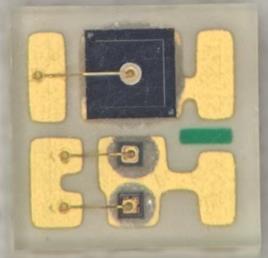
940 nm VCSEL with Photodiode
The 1616VCA940R8-PD0224-Z integrates a 940 nm VCSEL emitter and photodetector in a compact 1616 SMD format for optical sensing designs.
BOSA with PIN Receiver
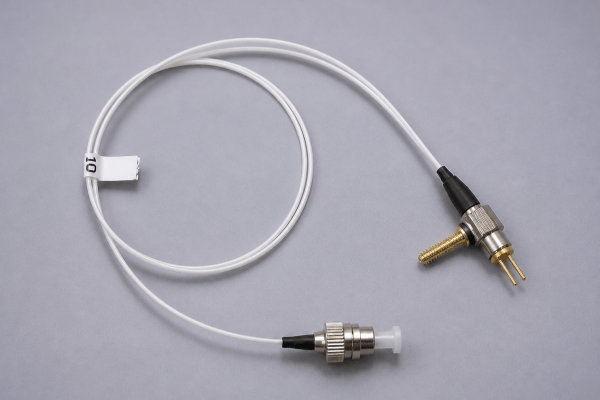
Selected optical sub-assemblies combine a DFB transmitter, PIN receiver and WDM optics with temperature control for bidirectional optical paths.
Where Lumi Photodiodes Fit
940 nm Infrared Sensing
Discrete silicon detectors for VCSEL/IR source pairing, object sensing and optical monitoring.
TDLAS Gas Analysis
InGaAs PIN wavelength coverage for compatible near-IR absorption-spectroscopy systems.
Optical Communication
Detection and monitoring at 1310 nm and 1550 nm system wavelengths.
Optical Power Monitoring
Photodiode feedback in laser modules, optical instruments and controlled emitters.
Compact Embedded Optics
1206 SMD silicon detectors for space-constrained PCB integrations.
OEM Receiver Modules
Detector selection coordinated with optical source, package, amplifier and environmental conditions.
What to Specify for a Photodiode RFQ
Optical Input
- Target wavelength or spectral band
- Expected received optical power or irradiance
- Optical geometry and photosensitive area
- Continuous, modulated or pulsed illumination
Electrical & Mechanical
- Bias, dark current and responsivity needs
- Capacitance, speed and bandwidth
- SMD or TO mechanical format and pinout
- Operating temperature, assembly and quantity
Photodiode Engineering Questions
What does a photodiode measure?
A photodiode converts incident light to a photocurrent. Its output depends on incident optical power, wavelength and device operating conditions.
Is silicon suitable for 1550 nm detection?
Silicon is generally not the suitable material for standard 1550 nm receivers. InGaAs PIN photodiodes are commonly used in that spectral region.
Which Lumi photodiodes support 940 nm sensing?
The current portfolio includes a 940 nm-focused TO-5 silicon device and a compact 1206 SMD silicon photodiode.
Can the 900–1700 nm InGaAs detector be paired with a methane DFB laser?
Its published wavelength range covers the near-IR methane-sensing region, but system performance depends on wavelength, receiver noise, optical power and amplifier design.
What is responsivity?
Responsivity is photocurrent per unit incident optical power, typically expressed in A/W at a specified wavelength and measurement condition.
Why does dark current matter?
Dark current contributes unwanted current and associated noise. Bias and temperature conditions affect the measured value.
Why is detector capacitance important?
Junction capacitance affects receiver front-end noise and achievable bandwidth in combination with the amplifier design.
Should I choose SMD or a TO package?
Choose based on mechanical alignment, PCB manufacturing, detector size, optical access and environment rather than package size alone.
Need a Photodiode Matched to Your Optical Source?
Share the wavelength, optical signal level, required speed and package constraints. Lumi can help review suitable silicon or InGaAs receiver options.