
Fiber-Coupled Laser Diodes for Sensing, Communication & OEM Systems
Lumi provides factory-aligned fiber-output laser diodes spanning precision DFB butterfly packages and compact cooled pigtailed TO-can devices. These products support optical sensing, gas spectroscopy, telecommunications, optical instrumentation and OEM fiber systems.
What Is a Fiber-Coupled Laser Diode?
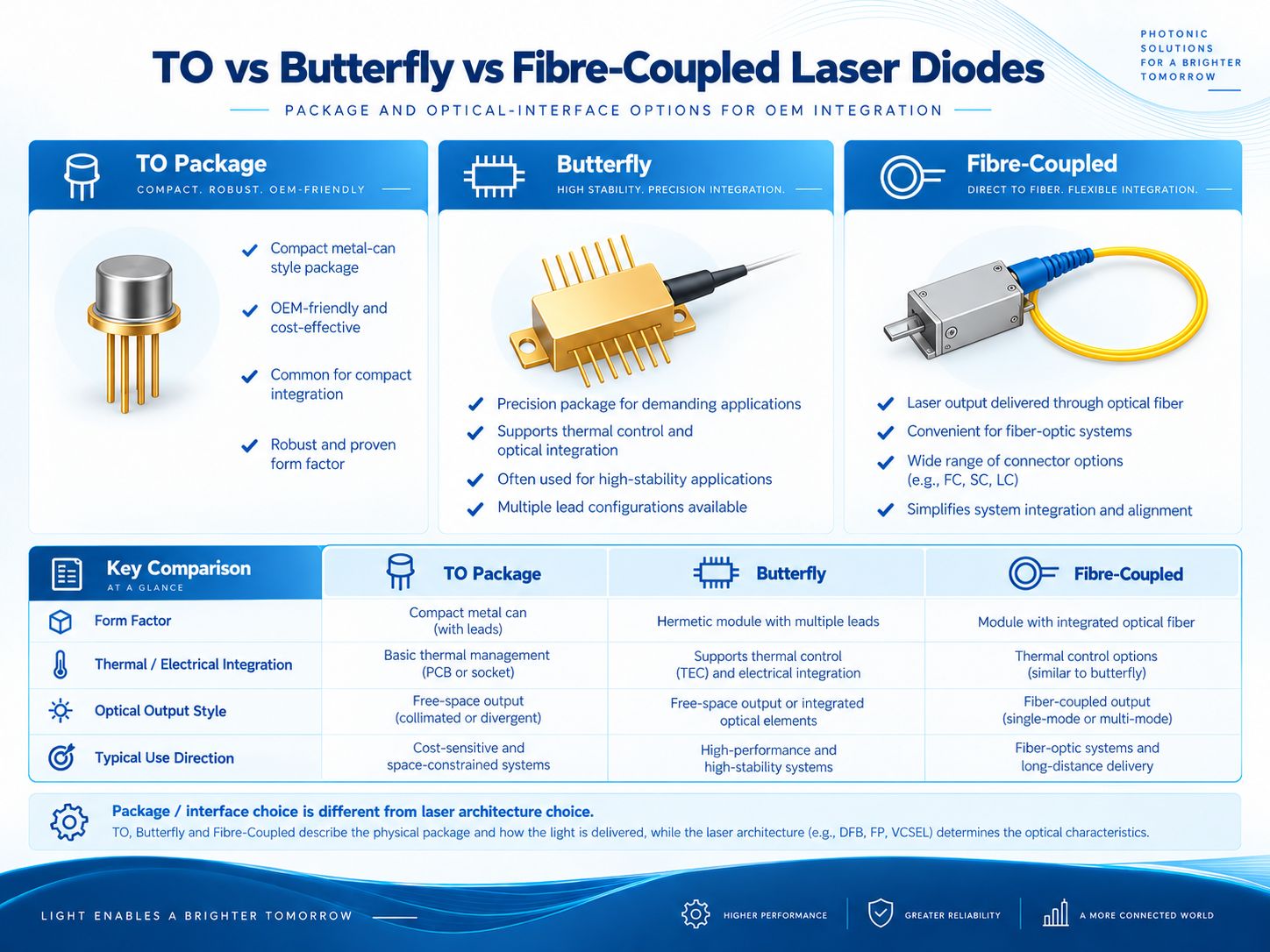
A fiber-coupled laser diode delivers its output into an optical fiber aligned and fixed at the package or assembly level. The host system receives a defined optical interface rather than relying on free-space beam capture and custom in-house alignment.
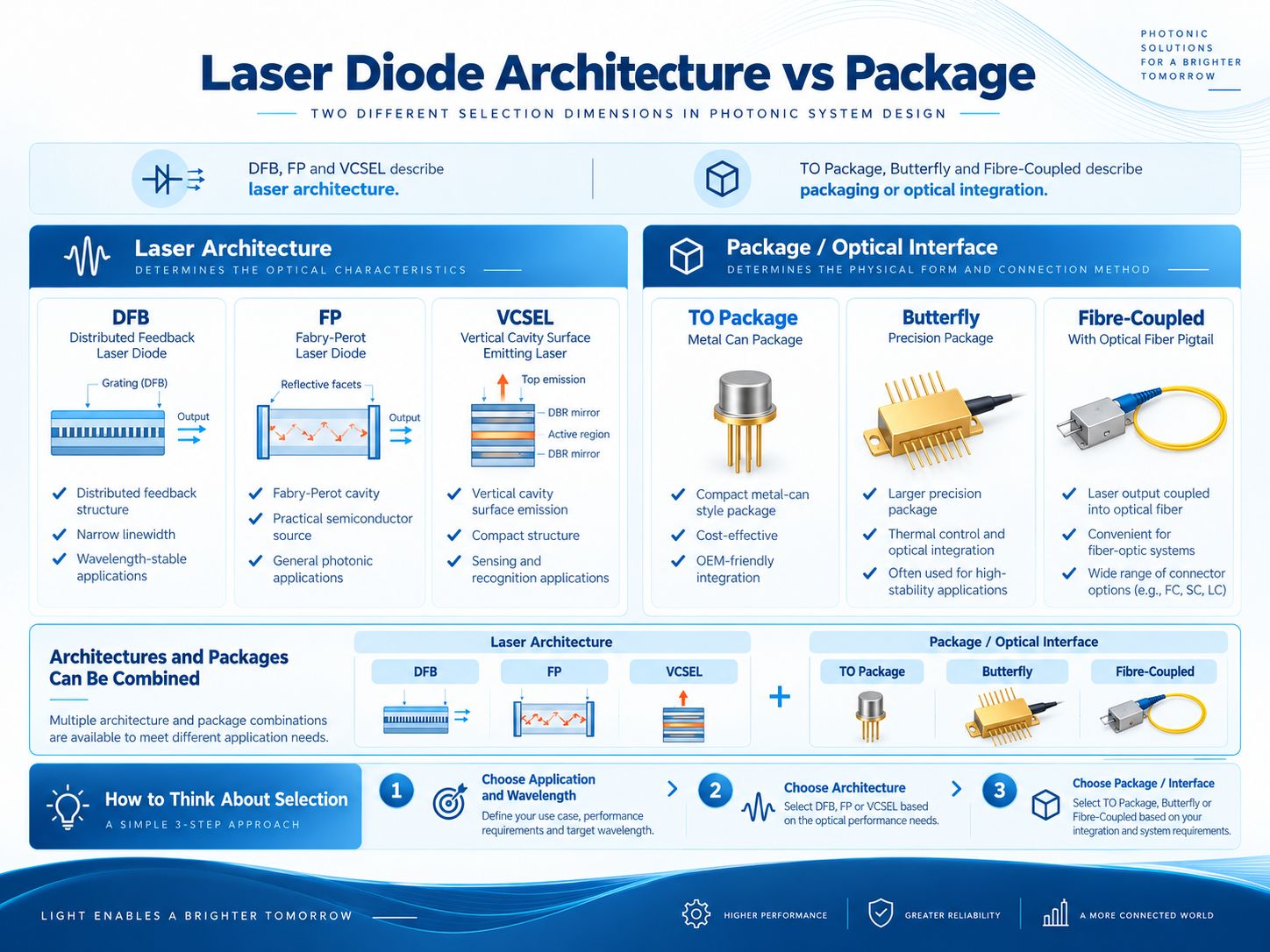
Fiber-coupled describes an output interface—not the laser architecture. A DFB or FP chip can be combined with a butterfly or TO-can package and the appropriate fiber-coupling optics.
In procurement, architecture, package and fiber must be specified separately.
Why Use a Factory-Aligned Fiber Output?
Reduced Alignment Work
The critical laser-to-fiber coupling alignment is established during laser assembly.
Flexible Optical Layout
Fiber enables placement of the laser source away from the sensing head, gas cell or instrument.
Defined Optical Connection
Specify SM/PM fiber, pigtail length, connector family and polish as purchase requirements.
Thermal Integration
TEC-equipped butterfly and cooled TO configurations support controlled optical operation.
Back-Reflection Management
Connector polish, optical isolation and system return loss can be considered together.
Modular OEM Design
The fiber output can reduce free-space optical assembly complexity at the OEM integration stage.
Explore Lumi Fiber-Coupled Laser Diodes
Choose a real model and open its technical specifications, fiber options, mechanical drawings and ordering details.

This product listing is maintained by WooCommerce. Some models appear in both the Butterfly and Fiber-Coupled categories because package and interface are independent attributes.
Single-Mode vs Polarization-Maintaining vs Multimode Fiber
| Fiber type | Optical behavior | Lumi supply direction | Selection note |
|---|---|---|---|
| SM | Single spatial propagation mode in the designed wavelength band | Common in DFB butterfly and pigtailed TO devices | Best when defined spatial mode matters but polarization preservation is not specified |
| PM | Preserves polarization relationships when correctly launched and aligned | Selected 1550 nm butterfly products | Specify polarization extinction ratio and alignment requirements |
| MM | Multiple propagation modes | Ordering direction on selected pigtailed TO families | Define core diameter, NA, power and coupling tolerance |
Fiber-Pigtailed Butterfly and Cooled TO-Can Devices

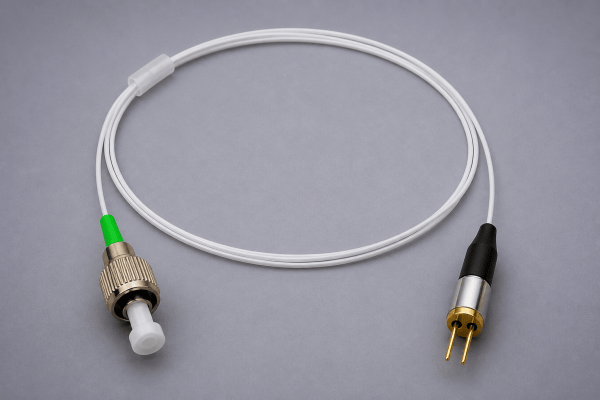
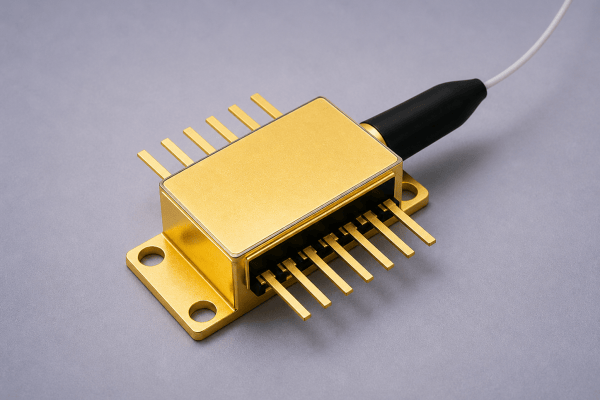
Butterfly Fiber Output vs Pigtailed TO-Can
| Factor | Butterfly + Fiber | TO-Can + Fiber |
|---|---|---|
| Integration | Often includes TEC, thermistor and optical monitoring | Compact package, selected cooled versions available |
| SM fiber | Available | Available |
| PM fiber | Available on specified 1550 nm products | Not a general default for current TO families |
| Form factor | Larger laser package | Smaller package |
| Typical use | Precision sensing, tunable and test systems | Compact gas detection and OEM fiber modules |
| Host electronics | Still needs suitable LD and TEC control | Depends on the exact cooled TO configuration |
Fiber-Coupled DFB Wavelength and Power Options
| Family | Representative wavelengths | Integration notes |
|---|---|---|
| Gas-sensing butterfly | 1273 / 1392 / 1653 nm | SM fiber, wavelength-specific spectroscopy, temperature control |
| Telecom / optical-test butterfly | 1310 / 1550 nm | DFB, TEC, SM fiber with model-dependent MPD and isolator |
| Higher-output butterfly | 1550 nm | 20 mW PM, 50 mW SM/PM and 100 mW-class narrow-linewidth directions |
| Tunable butterfly | O / C / L bands | SM fiber, wavelength-scanning option |
| Pigtailed cooled TO | 1290 / 1310 / 1610 / 1625 / 1653 nm | Compact DFB fiber output with ordering options |
| Gas-sensing pigtailed TO | 1273 / 1392 / 1512 / 1531 / 1653 nm examples | TEC and thermistor for wavelength-control requirements |
FC, SC, LC and APC / UPC / PC Interfaces
FC Connectors
Threaded connection often preferred for optical measurement and laboratory setups requiring a secure mechanical interface.
SC Connectors
Push-pull interface common in communication and installed fiber equipment.
LC Connectors
Small form-factor optical connector for systems requiring compact routing or higher connector density.
- APC: angled physical-contact polish helps mitigate return reflections in sensitive optical systems.
- UPC / PC: choose to match the other optical connector and performance requirements.
- Avoid mixing connector polish standards or incompatible adapters.
- Specify connector and fiber length as part of the requested configuration.
Back Reflection, Optical Isolation and Fiber Handling
Reflections at connectors, splices or optical components can return optical energy to the laser. This feedback may influence intensity noise, stability and spectral behavior, particularly for narrow-linewidth sources.
- Select APC connectors where low reflection is required.
- Review optical isolator specifications on the selected product.
- Keep mating ferrules clean and inspect connector damage.
- Control fiber routing and bend radius.
- Evaluate complete system return loss rather than assuming the package alone controls reflections.
Fiber-Coupled DFB Lasers for TDLAS Applications
Fiber delivery can separate the laser driver from the gas absorption cell or remote sensing head. For reliable TDLAS design, choose the gas absorption transition first, then confirm that the laser tuning range crosses the line with sufficient optical power at the detector.
01 · Target Molecule
Specify the exact molecular species and absorption transition.
02 · DFB Tuning
Confirm tuning via laser current and temperature over operating conditions.
03 · Optical Fiber
Select SM or PM and account for wavelength-compatible losses.
04 · Detection Chain
Match fiber output, gas cell, receiver sensitivity and electronics.
Where Fiber-Coupled Diodes Are Integrated
TDLAS Gas Detection
Remote optical absorption cells and gas measurement systems.
Fiber Communication
1310 nm and 1550 nm optical-source integration and link testing.
OTDR & Fiber Test
Fiber-delivered source options for optical instrumentation.
Optical Component Characterization
Stable or tunable fiber output for component evaluation.
Polarization-Sensitive Measurements
PM-fiber sources for systems requiring defined polarization relationships.
OEM Photonic Systems
Specified connector, fiber length, package, optical isolation and thermal control.
How to Specify a Fiber-Coupled Laser Diode
Optical Source
- Wavelength or spectral tuning requirement
- Required power at the fiber output
- DFB / FP architecture and linewidth
- CW operation, temperature and driver requirements
Fiber & Packaging
- SM / PM / MM and wavelength-appropriate fiber
- Pigtail length and connector family
- PC / UPC / APC polish
- Butterfly vs TO-can, TEC / MPD and isolation
Fiber-Coupled Laser Diode Questions
Does fiber coupling mean the laser uses DFB technology?
No. Fiber coupling is the optical interface; DFB, FP and other laser architectures may be fiber coupled.
What is the difference between a pigtailed TO-can and a butterfly?
They are packaging choices. Butterfly packages usually provide more room for thermal and monitoring functions, while pigtailed TO devices favor compact integration.
Is PM fiber the same as single-mode fiber?
PM fiber typically supports a single spatial mode but also helps preserve a defined polarization relationship when properly aligned.
Is connector polish important?
Yes. APC, UPC and PC connector polish choices affect reflections and mating compatibility. Match both connector family and polish to the target system.
Can a fiber-coupled DFB laser be used for methane sensing?
Yes, if the selected DFB device can be tuned across the required methane absorption line and the rest of the optics and receiver are compatible.
Does a fiber pigtail eliminate all optical alignment work?
It removes the laser-to-fiber alignment step at the source, but system-level coupling, connector cleanliness and alignment still matter.
What specifications are needed for an RFQ?
Provide optical wavelength, fiber-output power, linewidth, fiber type, connector, fiber length, packaging, thermal requirements and estimated order volume.
Specify a Fiber-Coupled Source for Your Project
Share your wavelength, fiber type, connector, package and power requirements. We can review the suitable published configurations and OEM integration options.