
DFB Laser Solutions for Precision Gas Sensing
Lumi supplies DFB laser diodes and packaged laser solutions for tunable diode laser absorption spectroscopy (TDLAS) gas-sensing projects. We support OEM developers in matching laser wavelength, thermal control, optical output and package configuration to their analyzer designs.
Current gas-sensing solutions include dedicated 1650.9nm heating-type and 1653.7nm TEC-cooled methane lasers, fiber-coupled butterfly modules and cooled TO-CAN laser configurations.

How Does a TDLAS Gas Sensing System Work?
TDLAS measures gas concentration by analyzing the absorption of laser light at selected molecular absorption wavelengths. A suitable laser source is an important part of the optical measurement chain.
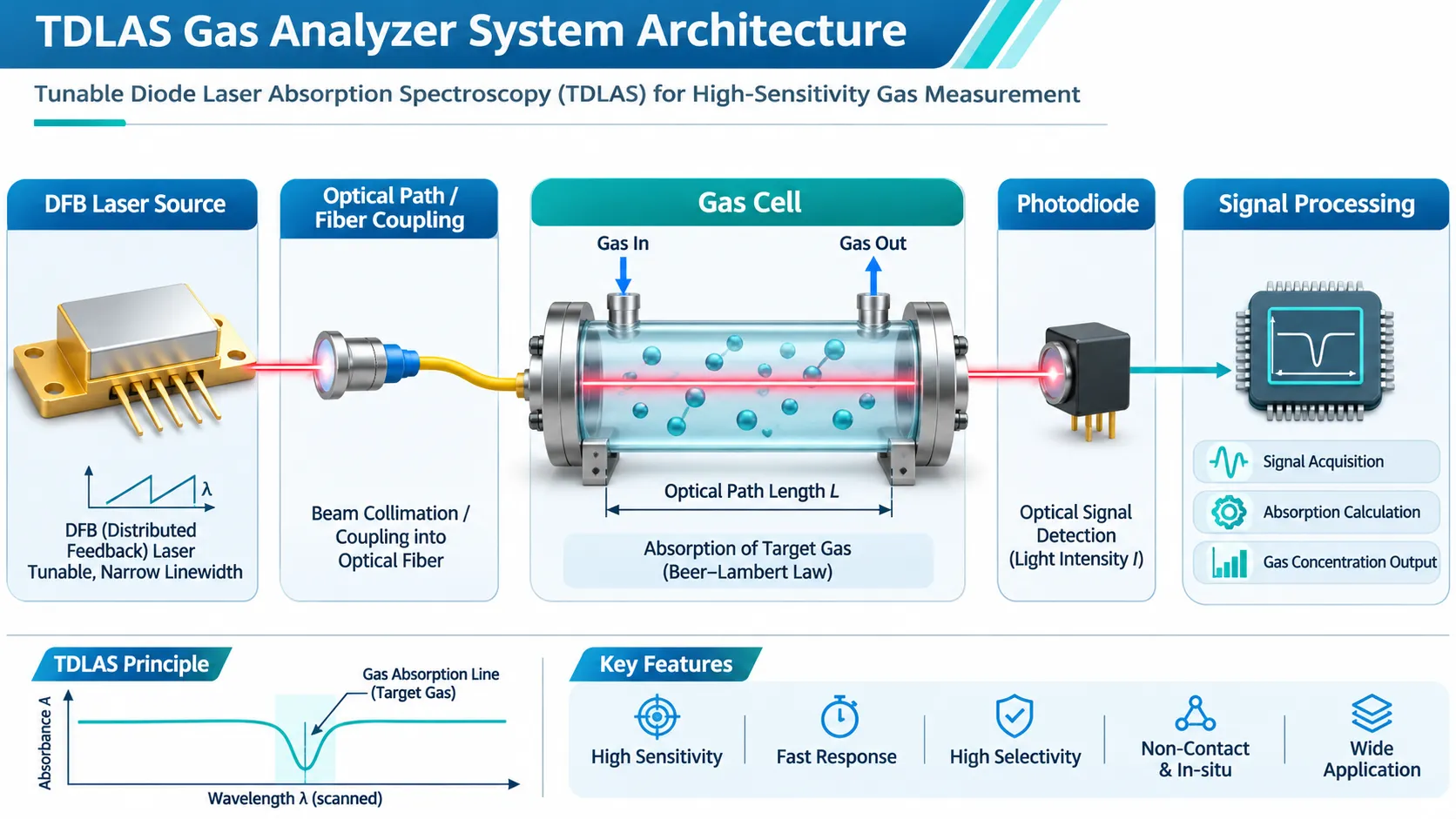
The Main Components of a TDLAS Analyzer
A typical TDLAS system combines an optical source, a gas measurement path, a photodetector and signal processing electronics.
- DFB Laser Source: Generates light near the selected gas absorption line.
- Optical Path: Directs laser light through free-space optics or fiber.
- Gas Cell: Provides the measurement path through the target gas.
- Photodetector: Converts transmitted optical power into an electrical signal.
- Signal Processing: Analyzes the absorption response to determine gas concentration.
The laser diode is one component of the complete analyzer. Its wavelength, tuning behavior and optical interface must be matched to the measurement system.
Start with the Gas Absorption Line When Selecting a TDLAS Laser
Selecting a laser for gas sensing requires more than identifying the target gas. The actual absorption feature and the analyzer's operating conditions determine the required laser wavelength and tuning range.
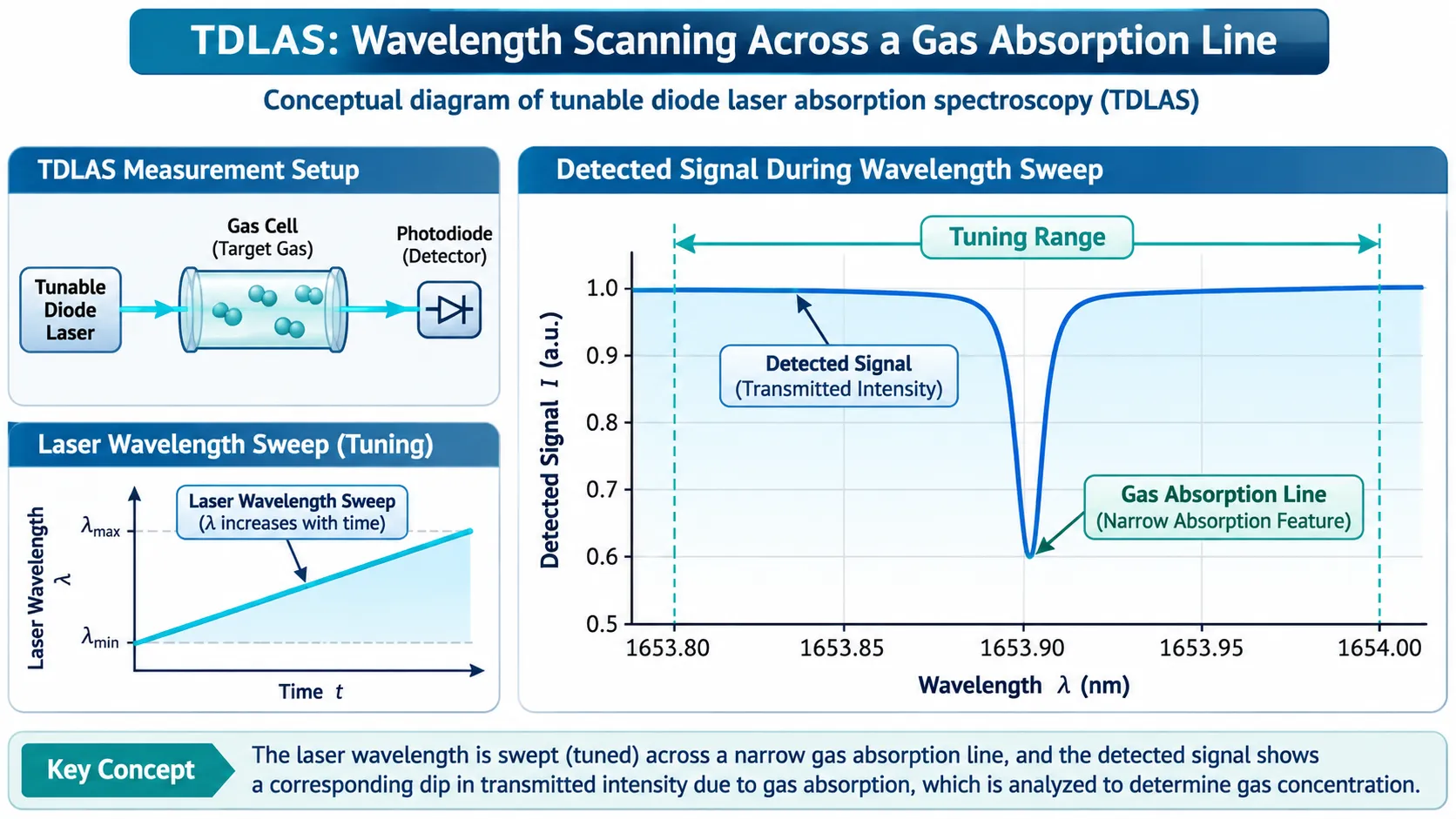
Understanding Laser Wavelength Scanning
A tunable DFB laser can scan across a selected molecular absorption feature by changing its operating current, temperature or both. The detector measures the transmitted optical signal as the laser wavelength changes.
The absorption response is then processed by the analyzer electronics. Depending on the system design, wavelength modulation spectroscopy (WMS) and harmonic signal analysis may also be used.
- Target gas and molecular absorption feature
- Center wavelength and required tuning range
- Interfering gases and operating pressure
- Temperature conditions and wavelength stability
- Optical path length and detector sensitivity
Important Wavelength Selection Considerations
Target Absorption Line
Identify the exact molecular absorption feature required by the analyzer instead of selecting a laser only by gas name.
Wavelength Tuning
Confirm the center wavelength and tuning range available under the intended current and temperature conditions.
Linewidth and SMSR
Review spectral characteristics such as linewidth and side-mode suppression ratio against the analyzer's optical requirements.
Optical Output Power
Match optical output to the optical path, gas cell, coupling losses and photodetector requirements.
Thermal Control
Evaluate heating or TEC-based temperature control according to the required wavelength stability and system architecture.
Optical Interface
Select free-space output, single-mode fiber or other optical interfaces according to the analyzer's mechanical design.
DFB Laser Diodes for TDLAS Gas Sensing
Explore Lumi's existing gas-sensing DFB laser products, including heating-type and TEC-cooled methane lasers, butterfly modules and fiber-pigtailed TO-CAN configurations.
Recommended Gas Sensing Laser Products
Product configurations and wavelength availability should be confirmed against the required model and ordering information.

Choosing the Right Laser Diode Package for TDLAS
Package selection affects mechanical integration, thermal management, optical coupling and the connection between the laser source and analyzer.
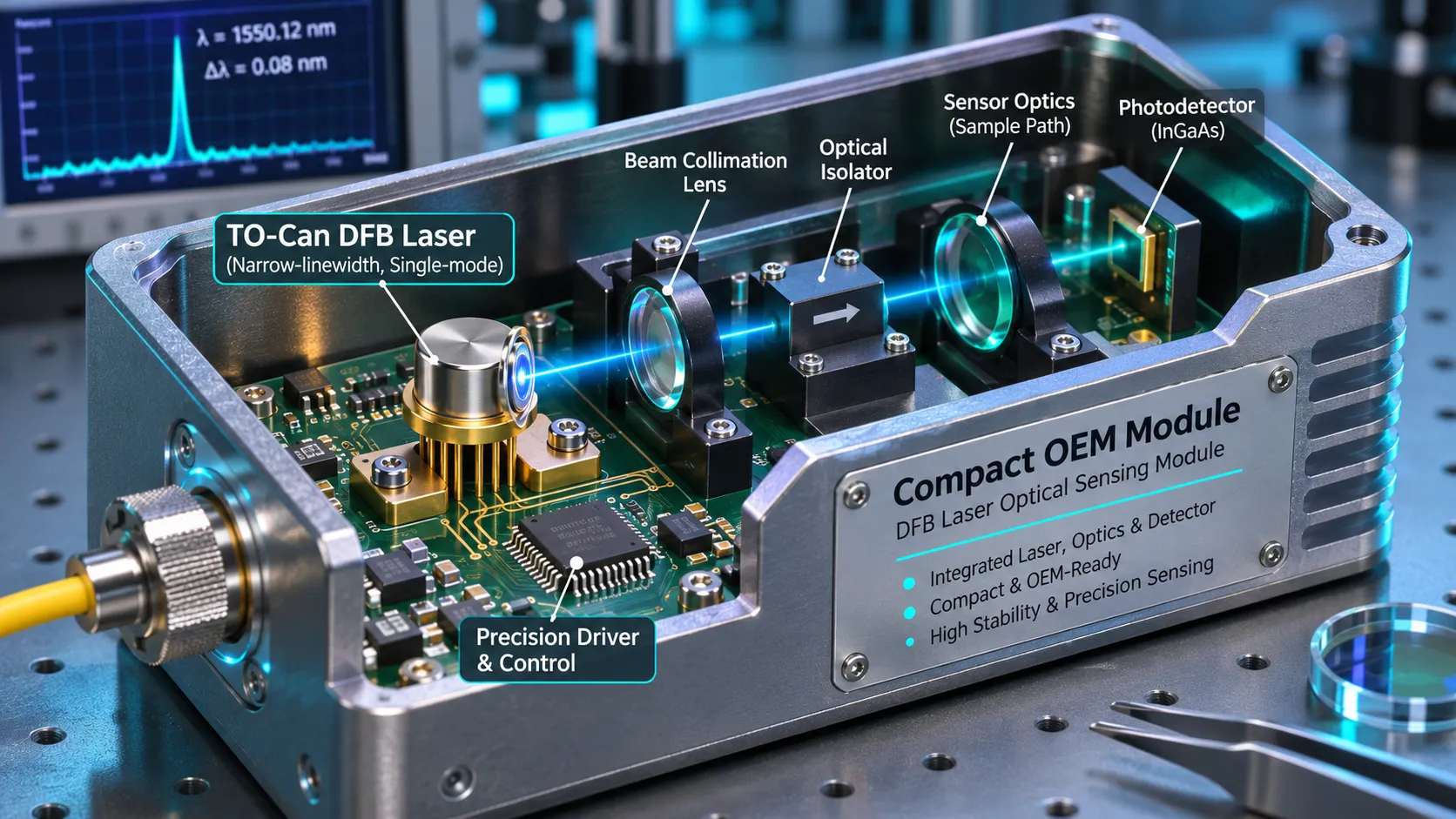
TO-CAN DFB Laser Diodes
TO-CAN laser diodes provide a compact package format for OEM gas-sensing equipment. Depending on the configuration, TO-CAN devices can be integrated with temperature-control components and fiber output.
- Compact mechanical integration
- Suitable for space-constrained analyzer designs
- Available gas-sensing configurations with thermal control
- Fiber-pigtailed options for optical coupling
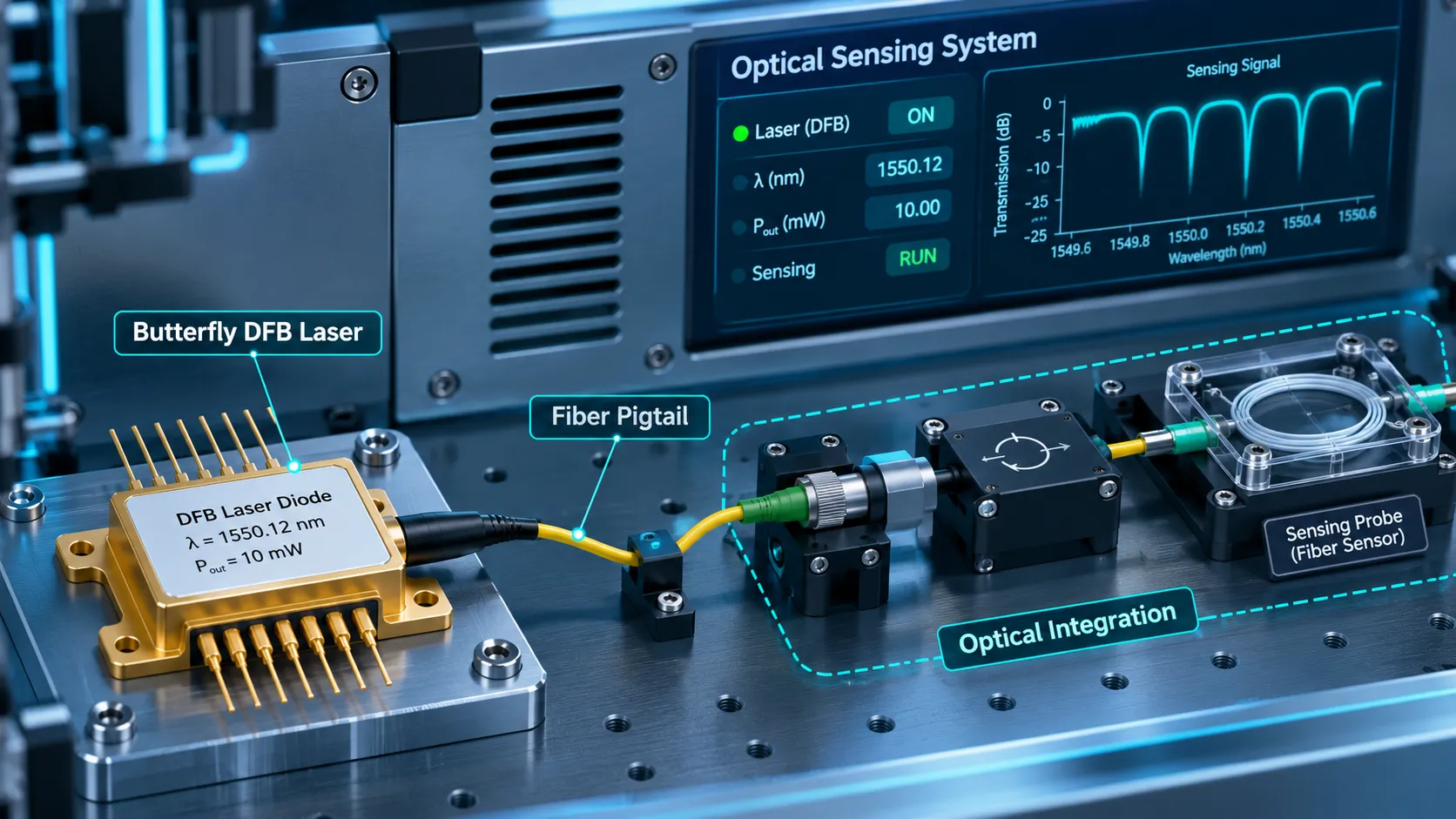
Butterfly DFB Laser Diodes
Butterfly laser modules combine a packaged DFB laser source with integrated thermal and monitoring functions. Fiber-pigtailed configurations can simplify optical connection in analyzer designs.
- Integrated TEC and thermistor options
- Monitor photodiode in supported configurations
- Single-mode fiber output options
- Suitable for fiber-coupled optical systems
Package appearance in the illustrations is conceptual. Refer to the individual product drawings and specifications for actual dimensions, pin assignments, fiber interfaces and ordering configurations.
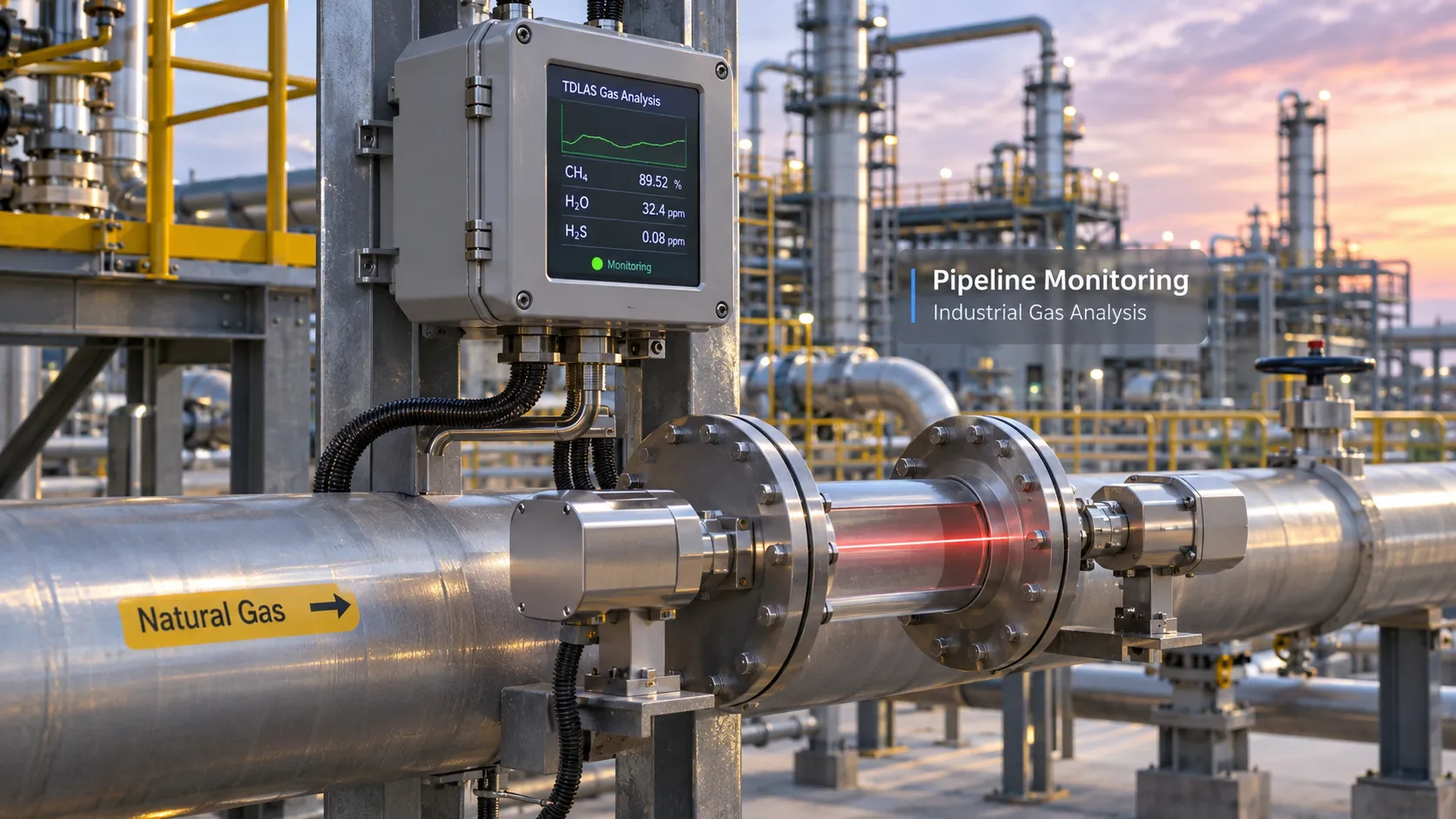
TDLAS Laser Sources for Industrial Gas Monitoring
TDLAS optical components can be integrated into different gas measurement architectures. The selected laser source depends on the target gas, measurement conditions and analyzer configuration.
Typical OEM Application Areas
Natural Gas Monitoring
Laser sources for methane measurement and natural gas analyzer development.
Industrial Process Gas
Optical gas measurement components for industrial process monitoring.
Gas Leak Detection
Laser source integration for gas detection and safety systems.
Environmental Monitoring
Optical components for environmental gas measurement instruments.
Photodetectors for TDLAS Receiver Design
The photodetector converts the transmitted laser signal into an electrical output for subsequent measurement and signal processing.
InGaAs PIN photodiodes are commonly considered for near-infrared optical detection. The detector should be selected according to the laser wavelength, optical power, responsivity, bandwidth and receiver circuit requirements.
The laser source and photodetector should be evaluated together as part of the analyzer's complete optical receiver design.
From Target Gas to TDLAS Laser Diode Sample
For a new analyzer project, start by defining the target absorption line and required laser configuration. Lumi can review the existing product range and evaluate project-specific requirements.
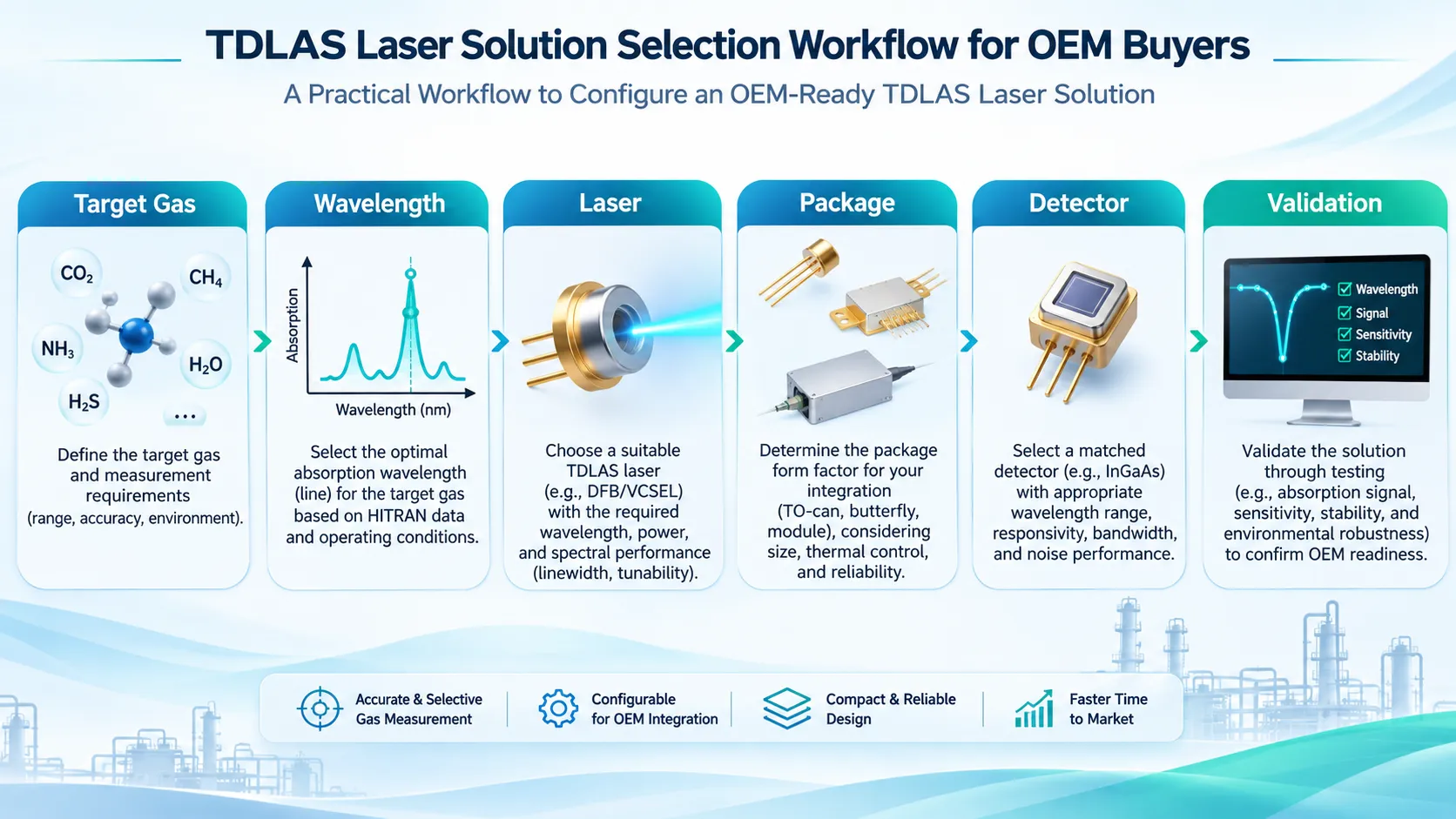
Define the Target Gas
Identify the target gas, measurement range and required absorption feature.
Confirm the Wavelength
Provide the center wavelength and required tuning range for the analyzer.
Select the Laser
Match the DFB laser architecture, optical output and spectral requirements.
Choose the Package
Define TO-CAN, butterfly or fiber-pigtailed integration requirements.
Evaluate the Detector
Check detector spectral response, optical power and receiver requirements.
Validate the Sample
Test the selected laser with the actual driver, thermal control and optical system.
What Information Should You Include in a TDLAS Laser Inquiry?
Providing the following information helps our team identify a suitable existing product or evaluate a project-specific configuration.
| Requirement | Information to Provide | Why It Matters |
|---|---|---|
| Target Gas | CH₄ or other target gas | Identifies the absorption feature. |
| Center Wavelength | Required wavelength in nm | Determines the suitable laser configuration. |
| Tuning Range | Required wavelength scan range | Confirms absorption-line coverage. |
| Optical Output Power | Required power and test conditions | Supports optical path and receiver design. |
| Thermal Control | Heating / TEC / Other | Defines the temperature-control architecture. |
| Laser Package | TO-CAN / Butterfly | Determines mechanical integration. |
| Fiber Requirements | SM / PM / Connector type | Defines optical coupling requirements. |
| Photodetector | InGaAs PIN / Other | Helps evaluate the receiver configuration. |
| Sample Quantity | Prototype / Development | Helps determine the supply arrangement. |
| Annual Demand | Estimated production volume | Supports repeat-supply planning. |
Continue Your TDLAS Laser Selection
Explore related technical guides to understand laser architecture, methane wavelength selection and package integration.
TDLAS Laser Diode FAQ
Common questions about laser source selection, wavelengths, packages and OEM integration.
What type of laser diode is commonly used in TDLAS?
DFB laser diodes are commonly used in TDLAS gas measurement systems because they provide narrowband emission and wavelength control around selected molecular absorption features. The appropriate laser depends on the target gas, absorption line and analyzer design.
Why are DFB laser diodes used for gas sensing?
DFB laser diodes provide single-frequency or single-mode optical emission suitable for wavelength-selective gas measurement. Their wavelength, tuning characteristics, optical power and spectral performance must be matched to the measurement requirements.
How do I choose the correct laser wavelength for TDLAS?
Start with the target gas and the specific molecular absorption line. Then confirm the center wavelength, required tuning range, operating temperature, interfering gas conditions and optical path design. A gas name alone is not sufficient to determine the correct laser model.
What is the difference between 1650.9nm and 1653.7nm methane DFB lasers?
Lumi offers a 1650.9nm heating-type DFB laser and a 1653.7nm TEC-cooled DFB laser. They use different thermal control architectures. The selection should follow the analyzer's target absorption line and temperature-control requirements.
What is the difference between TO-CAN and butterfly DFB lasers?
TO-CAN and butterfly packages provide different mechanical and optical integration formats. Butterfly modules can incorporate TEC, thermistor and monitor photodiode functions, while TO-CAN configurations offer compact package options. Check the exact product configuration for pinout and fiber details.
Can Lumi provide fiber-coupled DFB laser diodes for TDLAS?
Yes. Lumi's gas-sensing product range includes a fiber-pigtailed butterfly DFB family and cooled TO-CAN laser configurations with fiber output. Available wavelengths, fiber types and connectors depend on the selected model.
Does a TDLAS system require a separate photodetector?
A typical TDLAS optical measurement system uses a photodetector to convert transmitted laser light into an electrical signal. The detector should be selected according to wavelength, optical power, responsivity and receiver bandwidth.
Can Lumi evaluate custom wavelength requirements?
Lumi can review project-specific wavelength and package requirements. Please provide the target absorption line, center wavelength, tuning range, optical power, thermal-control requirements and expected quantity for feasibility evaluation. Custom evaluation does not imply that every wavelength is a standard stocked product.
What information should I provide for an OEM inquiry?
Include the target gas, center wavelength, tuning range, optical output power, package preference, fiber requirements, thermal-control architecture, sample quantity and estimated annual demand. This helps our team evaluate the suitable product configuration.
Looking for a DFB Laser Source for Your TDLAS Project?
Tell us your target gas, required wavelength, package and optical interface. Lumi can help review the available DFB laser products and evaluate your OEM requirements.