
Optical Sub-Assemblies for Bidirectional Fiber Systems
Integrating an optical transmitter, receiver and wavelength-routing path into a compact fiber interface.
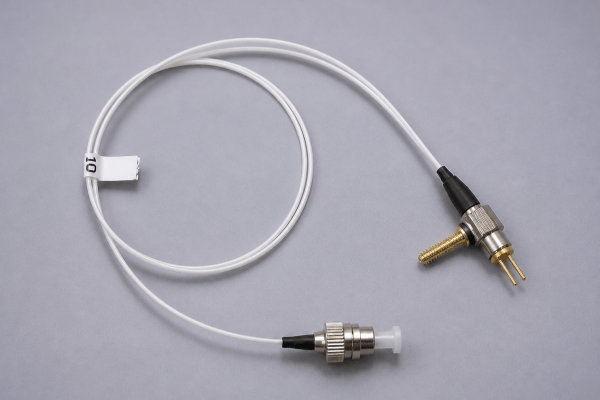
Lumi supplies cooled BOSA (Bi-Directional Optical Sub-Assembly) solutions for CATV, Radio Frequency over Glass (RFoG), analog optical links and OEM fiber-optic equipment. Our current BOSA platform combines a DFB laser transmitter, PIN photodiode receiver, WDM optical path, optical isolator and temperature-control components.
What Is an Optical Sub-Assembly?
An optical sub-assembly (OSA) is an integrated building block that performs one or more optical functions inside a larger communication or sensing system.
In fiber-optic hardware, optical sub-assemblies reduce the need to align discrete emitters, photodetectors and optical interfaces separately. The three familiar functional terms are TOSA (transmit), ROSA (receive) and BOSA (bidirectional transmit and receive).
| Assembly | Primary Function | Typical Optical Elements | Lumi Product Scope |
|---|---|---|---|
| TOSA | Optical transmission | Laser source, optical coupling, monitor functions depending on design | Architecture reference |
| ROSA | Optical reception | Photodiode, receiver optical path and optional receiver electronics | Architecture reference |
| BOSA | Combined optical Tx/Rx | DFB laser, PIN photodiode, wavelength-management optics and fiber interface | Current cooled BOSA offering |
How a BOSA Transmits and Receives over One Fiber
The transmit and receive channels use different optical wavelengths, separated internally by wavelength-division multiplexing (WDM) optics.
- Transmit / Tx
DFB Laser Transmitter
Generates the outgoing optical carrier. The optical path routes it toward the shared fiber, with an optical isolator controlling feedback into the source.
- Wavelength Routing
WDM Optical Path
Directs the outgoing wavelength into the fiber and routes the incoming wavelength toward the PIN receiver, keeping the two channels separated.
- Receive / Rx
PIN Photodiode Receiver
Converts incoming optical power into an electrical signal for the host receiver electronics and RF or digital processing path.
Cooled BOSA Module: DFB Transmitter + PIN Receiver
The current Lumi BOSA integrates a wavelength-controlled DFB transmitter with a high-linearity PIN receiver, thermoelectric cooling and a single-mode fiber interface.
DFB Transmitter — Representative Parameters
| Parameter | Value |
|---|---|
| Optical output @ 30 mA | 2 mW typ. |
| Side-mode suppression ratio | 35 dB typ. |
| Laser linewidth | 3 MHz typ. |
| Optical isolation | ≥ 25 dB |
| Transmitter bandwidth (−3 dB) | ≥ 1.2 GHz |
| Temperature control elements | Integrated TEC and thermistor |
PIN Receiver — Representative Parameters
| Parameter | Value |
|---|---|
| Responsivity | ≥ 0.8 A/W |
| Receiver bandwidth | ≥ 1.5 GHz |
| Capacitance | 0.5 pF typ. |
| Dark current | ≤ 5 nA |
| Return loss | ≥ 40 dB |
| Detector type | High-linearity PIN photodiode |
These values describe the current cooled BOSA family under its specified operating conditions. Confirm the required variant, test conditions and mechanical configuration on the product specification page.
Explore Lumi Optical Sub-Assemblies
Browse available optical sub-assembly products and open the individual product page for technical specifications, available interfaces and OEM enquiry details. The listing below is updated from WooCommerce automatically.

Tx / Rx Wavelength and Fiber Interface Selection
Optical wavelength planning is central to BOSA integration. Choose transmit and receive wavelengths as a compatible pair for your optical network, including the WDM filter design and remote endpoint.
| Configuration | Current Product Options | Selection Considerations |
|---|---|---|
| Tx wavelength | 1270, 1290, 1310, 1450, 1470, 1490, 1550, 1610 nm | Match outgoing optical carrier and WDM channel. |
| Rx wavelength | 1310 or 1550 nm | Match incoming signal and WDM receiver port. |
| Fiber type | Single-mode | Verify fiber system and optical budget. |
| Connector family | SC / FC / LC, configuration dependent | Confirm hardware interface and pigtail length. |
| Connector polish | PC / UPC / APC, configuration dependent | Consider return reflection and mating compatibility. |
| Case temperature | −40 to +85°C with heatsink | Evaluate case heat removal and external TEC control. |
Why Cooling and Optical Isolation Matter
TEC Cooling
Active thermal control helps keep the DFB laser operating within its target temperature window in wavelength-sensitive optical systems.
Thermistor Feedback
Temperature sensing supports the host TEC controller. The BOSA contains the thermistor, but regulation requires external control electronics.
Optical Isolation
Integrated isolation helps limit unwanted optical feedback from the fiber interface toward the DFB transmitter.
System Repeatability
Stable electrical, thermal and optical conditions support more repeatable Tx/Rx behavior across the OEM operating environment.
Where Lumi Cooled BOSA Modules Are Used
The current platform is best positioned for analog-capable and bidirectional fiber-optic assemblies where wavelength separation, optical linearity and controlled laser operation matter.
CATV Optical Systems
DFB transmission and high-linearity PIN reception for RF-over-fiber and CATV-oriented node designs.
RFoG Networks
Bidirectional optical building blocks for Radio Frequency over Glass equipment and compatible access architectures.
Single-Fiber Optical Links
Separate Tx/Rx wavelength channels routed through a shared single-mode fiber interface.
Analog Optical Transport
Applications where receiver and transmitter distortion, bandwidth and noise performance are part of the system specification.
OEM Optical Modules
Optical source/receiver assemblies integrated with the customer's driver, electronics, thermal controller and host mechanics.
Specialized Fiber Equipment
Project-specific bidirectional optical systems evaluated against the available wavelength, output and receiver requirements.
BOSA Is Not a Complete Optical Transceiver
The BOSA integrates core optical transmission and reception functions. A finished optical module or system normally requires additional electronics, controls and mechanical interfaces.
When sourcing a component for SFP-type, RFoG, ONU or custom fiber equipment, first identify whether your requirement is the optical sub-assembly itself or a complete transmitter/receiver module.
Read the BOSA Module Engineering Guide →Typical Host-System Requirements
- Laser driver and optical power-control circuit
- PIN receiver / transimpedance or RF electronics
- TEC controller and thermistor feedback
- Wavelength and link-budget management
- Power supply, PCB and electrical protection
- Mechanical mounting, heatsink and system calibration
How to Specify an Optical Sub-Assembly
For an OEM BOSA design, begin with the optical link requirements. The package and connector should be selected after the transmit/receive functions and operating conditions are defined.
Define Tx and Rx
Provide outgoing and incoming wavelengths, WDM requirements and the remote-side optical endpoint.
Calculate the Budget
Set transmit power, receiver input range, insertion loss, return loss and optical design margin.
Check Linearity
Define receiver bandwidth, analog RF distortion or applicable digital signal requirements.
Plan Heat Removal
Check TEC controller capability, thermistor feedback, heatsink and case temperature.
Choose Fiber & Connector
Confirm single-mode fiber, pigtail length, connector family and polish configuration.
Provide Project Details
Share anticipated volume, delivery requirements, testing and electrical/mechanical integration constraints.
Current BOSA Product Images and Integration Reference
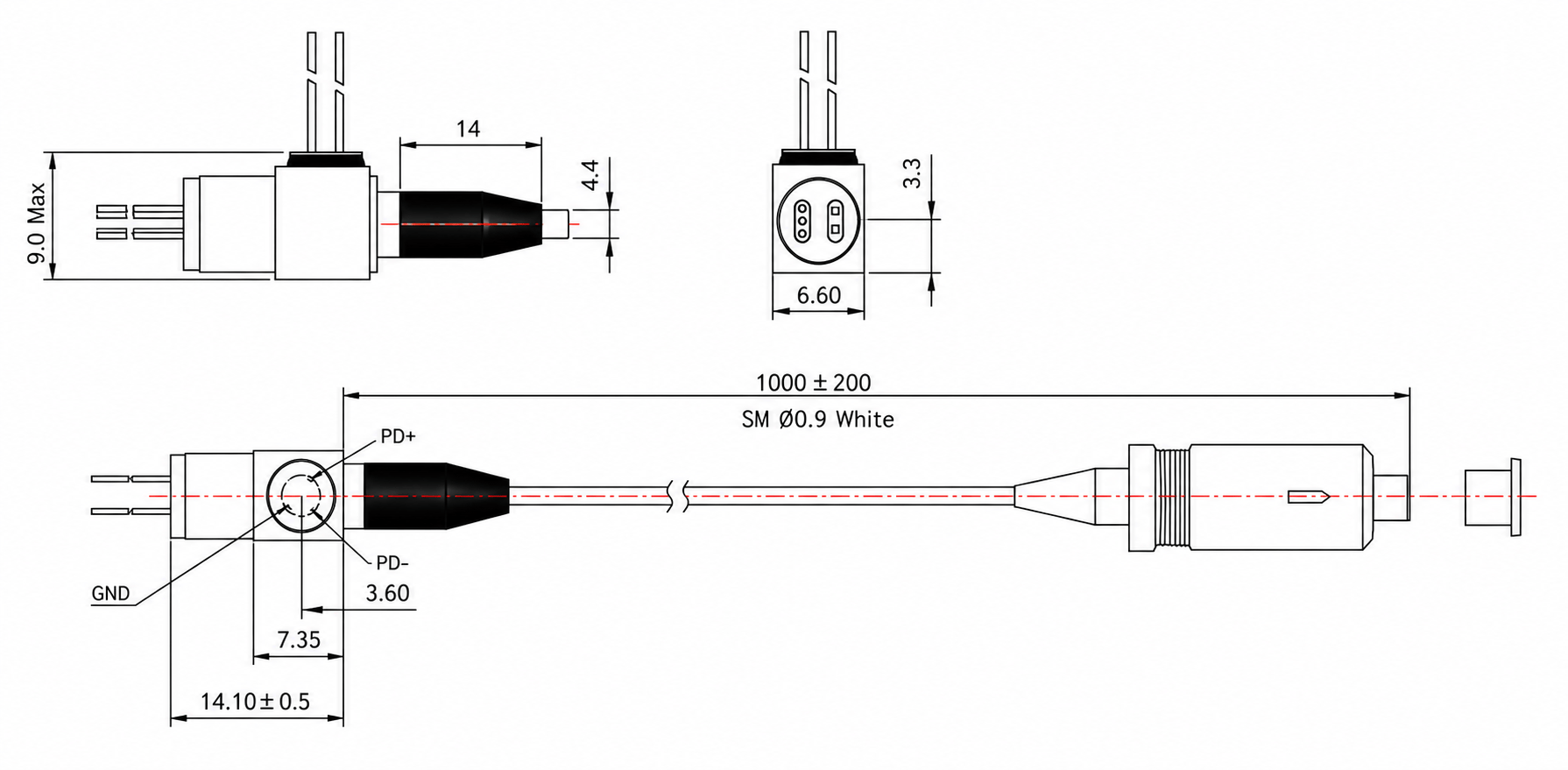
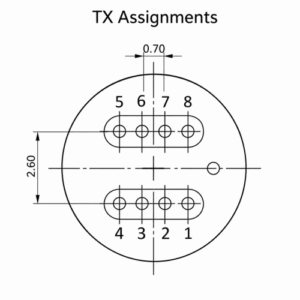
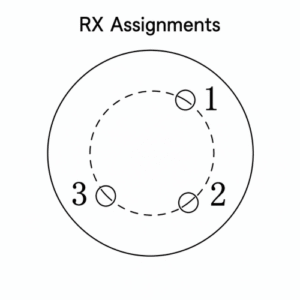
The current cooled BOSA product documentation includes the product body, fiber pigtail and supporting product imagery. Use the individual WooCommerce product page for the complete manufacturer's specification and available configuration information.
For actual integration, confirm the product outline, pin definition, connector and optical path against the selected version. No mechanical dimensions should be inferred from marketing imagery alone.
Frequently Asked Questions
What does BOSA stand for?
BOSA means Bi-Directional Optical Sub-Assembly. It combines optical transmit and receive functions, typically using wavelength-management optics to share a fiber path.
How are TOSA, ROSA and BOSA different?
TOSA handles transmission, ROSA handles reception, and BOSA combines both optical directions. Lumi's current published OSA offering is a cooled BOSA module rather than separate standalone TOSA and ROSA series.
Is a BOSA the same as an SFP or complete transceiver?
No. A BOSA provides optical Tx/Rx functions. A finished transceiver also needs driver/receiver electronics, power regulation, control logic, a PCB and mechanical/electrical interfaces.
What transmitter and receiver are used in the current Lumi BOSA?
The current cooled platform integrates a DFB laser transmitter and high-linearity PIN photodiode receiver with WDM optics, optical isolation, TEC and thermistor components.
Which Tx and Rx wavelengths are available?
Published Tx options include 1270, 1290, 1310, 1450, 1470, 1490, 1550 and 1610 nm; Rx options include 1310 and 1550 nm. Confirm the exact compatible wavelength pair before ordering.
Why are TEC and thermistor needed?
The TEC supports active laser temperature control, while the thermistor provides feedback for the external controller. The BOSA does not regulate its own temperature without appropriate host electronics.
Can a BOSA be used in CATV or RFoG equipment?
Yes, the current platform is designed with analog-oriented applications in mind. The finished system must still meet its required wavelength plan, link budget, noise, bandwidth and linearity requirements.
What information is useful for a BOSA quotation?
Provide your application, Tx/Rx wavelength pair, optical power and receiver requirements, bandwidth/linearity targets, fiber connector/polish, operating temperature and estimated quantity.
Need a BOSA Module for Your Fiber-Optic Design?
Share your Tx/Rx wavelengths, optical budget, required bandwidth or analog linearity, fiber interface, thermal conditions and estimated quantity. We can help evaluate the appropriate configuration for your project.